Strategies for Accessing Capital and Key Components Businesses Must Consider

Welcome to our training session on “Strategies for Accessing Capital and Key Components Businesses Must Consider” tailored specifically for professionals in the construction industry. In today’s rapidly evolving market, the ability to effectively manage financial capacity and foster sustainable financial health is paramount for construction companies. Throughout this session, we will delve into practical strategies aimed at optimizing financial capacity management within the construction sector, empowering participants with actionable insights to enhance their financial decision-making skills. We will explore avenues to build strong relationships with financial institutions, outline potential sources of funding, and discuss key components businesses must consider for long-term success. By the end of this training, you will be equipped with the knowledge and tools needed to navigate the complexities of accessing capital and fostering financial resilience in the construction industry. Let’s embark on this journey together towards financial empowerment and success!
Objectives


  • Offer strategies for effective financial capacity management in the construction industry.
  • Explore ways to foster sustainable financial health within construction companies.
  • Equip participants with actionable insights to enhance their financial decision-making skills in construction projects.
  • Build relationships with financial institutions and outline potential sources of funding

Summary

Implementing these steps provides a foundational framework for enhancing financial capacity. Regular monitoring and adjustments ensure the plan remains aligned with the dynamic nature of the construction industry.


  1. Financial Assessment
  2. Goal Setting:
  3. Budgeting and Forecasting:
  4. Risk Management:
  5. Funding Strategies:


  1. Project Viability: Financial capacity ensures that a construction project is feasible and viable, providing the necessary resources for initiation, sustenance, and successful completion.


  1. Risk Mitigation: Strong financial capacity acts as a buffer against unforeseen challenges and risks, allowing construction companies to adapt and navigate issues without compromising project quality or timelines.


  • Credibility and Competitiveness: Financial stability enhances a construction company’s credibility, fostering trust among stakeholders. It also positions the company to submit competitive bids, demonstrating the ability to fulfil contractual obligations and ensuring long-term success.

Definition of Financial Capacity in the Context of Construction

Financial capacity in construction refers to a company’s ability to fund, manage resources, and mitigate risks effectively for successful project initiation and completion.

  1. Project Delays: Insufficient funds can lead to delays in acquiring necessary resources, materials, and labor, impacting project timelines and completion dates.


  1. Quality Compromises: Limited financial capacity may force cost-cutting measures, resulting in compromised quality of materials and workmanship, affecting overall project quality.


  1. Legal Issues: Financial constraints can lead to non-compliance with contractual obligations, potentially resulting in legal disputes, fines, or contractual breaches.


  1. Safety Concerns: Inadequate resources may hinder investment in proper safety measures, increasing the risk of accidents and jeopardizing the well-being of workers on the construction site.


  1. Stakeholder Discontent: Insufficient funds can strain relationships with clients, subcontractors, and suppliers, causing dissatisfaction and potential disputes, negatively impacting project outcomes and future opportunities.


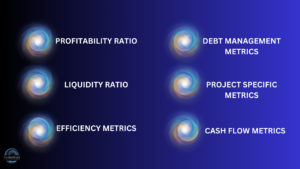
Understanding and utilizing essential financial metrics is paramount for successful project management and overall business success. These metrics provide valuable insights into the financial health, efficiency, and profitability of construction projects. Let’s explore the key financial metrics crucial for effective decision-making in the construction industry:

TRADITIONAL FINANCING


  1. Construction Loans:
  2. Term Loans:
  3. Lines of Credit:
  4. Commercial Real Estate Loans:


ALTERNATIVE FINANCING

  1. Crowdfunding
  2. Private Equity

Benefits:

Diverse sources beyond loans, fostering innovation, mitigating risks, community support, and showcasing adaptability in changing markets.


Considerations:

Navigate unique regulatory aspects, communicate effectively, assess risks, conduct thorough research, and consider public perception for successful adoption of alternative funding methods.

 Overview of Government Support Programs for Construction

  • Government support programs aim to boost construction industry growth.
  • Offer financial assistance through grants and subsidies.
  • Promote innovation, sustainability, and community development.
  • Crucial for enhancing financial capacity and undertaking priority projects.
  • Understanding and navigating these programs is essential for industry stakeholders.


Identifying Eligibility Criteria for Grants and Subsidies

Clearly defined eligibility criteria are set for accessing grants and subsidies.

  • Criteria may include project scope, size, location, and alignment with government priorities.
  • Financial health, past performance, and adherence to regulations are often assessed.
  • Demonstrating community impact, sustainability, and innovation may enhance eligibility.
  • Thoroughly understanding and meeting these criteria is essential for successful grant or subsidy applications.

Creating a Comprehensive Financial Plan


Definition

A comprehensive financial plan for a construction business is a strategic document outlining financial goals, risk mitigation, and resource allocation. It fosters informed decision-making, manages risks, builds investor confidence, aligns with business goals, and ensures adaptability.


Importance

This tool supports long-term sustainability, facilitates performance evaluation, ensures regulatory compliance, and serves as a transparent communication tool for stakeholders. Ultimately, it is integral to achieving financial success and sustained growth in the dynamic construction industry.

  • Guides financial management in construction projects.
  • Ensures efficient resource allocation.
  • Mitigates risks and enhances project control.
  • Detailed cost estimation and analysis.
  • Historical data analysis for benchmarking.
  • Collaboration with project stakeholders for comprehensive insights.
  • Anticipates financial challenges and opportunities.
  • Helps in strategic decision-making and risk mitigation.
  • Enhances adaptability to changing market conditions.

Overview of Lenders’ Expectations in the Construction Industry

  • Lenders in the construction industry expect a clear and detailed project proposal outlining scope, timeline, and budget.
  • Robust financial documentation, including credit history, cash flow projections, and collateral details, is crucial for lender confidence.
  • Adherence to project milestones, budget management, and effective communication are key expectations for successful collaboration with lenders.
  • Project Viability
  • Collateral and Security
  • Financial Stability
  • Experience and Track Record
  • Comprehensive Project Plan
  • Legal and Regulatory Compliance
  • Market Conditions
  • Contractual Agreements
  • Exit Strategy
  • Risk Mitigation Strategies


  • Abnormal weather caused delays;
  • Cost overruns where the actual cost of an item exceeds the amount allocated to such item
  • Design errors
  • Unanticipated price of materials or interest rate increases
  • Contractor coordination issues and errors
  • Unforeseen soil conditions

According to the Project Management Institute, “by pooling the risk contingency costs together so the cost of any risk occurrence can be absorbed, it is easier to track risk occurrence. Data representation, such as charts and graphs, can be used to track the use of the reserve over time and how it affects the project schedule and budget.


Without the contingency reserve, those extra days and money come out of the actual schedule and budget, causing delays and cost overruns. If this happens, then the project will be derailed. With this data, it is also easier to see where risks are coming from. For example, if time delays due to training cause eight days to be spent from the risk contingency reserve, that can become a lesson learned for future projects.”